Our yellow peugeot 504 (which we pronounced as Pijot until urban literacy caught up with us ) was the heart, soul and mind of my father. It was old (replace that with vintage for baddie effect); and had rustic brown leather seats and a steering wheel wrapped in a leather cover. Around the leather cover was a red string, carefully curved around the wheel, making little bun-like loops all the way around it. Our father told us that the red string around the cover gave it a solid grip.I don’t know if that was true. It was simply one of those things you accepted without question because your father said so.
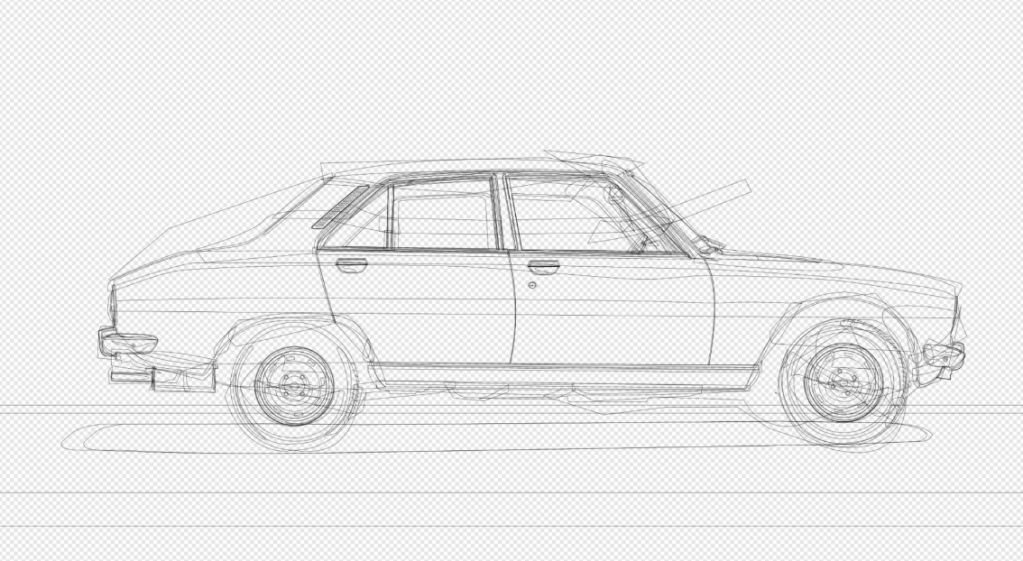
That Peugeot was more than a car, it was the fifth child of the home. It carried us through childhood and through the small rituals that make up a life: like the one man, one guitar cassette that was replayed across the dusty roads of Makueni to the perfect green of Karatina. And he would always sing along to every song, nodding, sometimes whistling along to the beat, sometimes reminding us loudly that music was good for the soul –my father!
It was dependable in the way my father was dependable. Solid. Familiar. Resilient. Built for a world that rewarded a tenacious spirit. I like to think that the car and its owner were born of the same kind of era; where you earned your place through grit, where experience counted for something, and where the things you built became more valuable with time.
He had built his career in banking in much the same way. He knew his craft. He understood the rules. He had accumulated the kind of experience that was supposed to become more valuable with time. And it did.
Until the internet arrived!
***
I still remember the dot-com frenzy with bemusement.
I remember the pride of being a dot-com child; one of the golden children who understood the language of the internet. We were often high on the screeching dial-up tones and the promise of a borderless future. We marvelled at the possibility of globalisation and everything it was going to do for us. We felt clever. Digitally literate. Modern. Superior even! We didn’t quite think of ourselves as disruptive. Instead, we saw ourselves as the future. And the future was naturally ours.
We looked at the Boomers still buried in paperwork with a slight tinge of commiseration. Oh, how difficult it must be for these relics.
But the internet wasn’t just a new language for them; it was a shifting tide under their feet. In the banking halls, the whisper of ‘disruption’ began to grow louder. The tenacity that had served them for decades was suddenly pitted against an algorithm. Experience (in the old ways) was no longer viewed as an asset but baggage.It was the beginning of an era that wanted not only to automate the ledger but also reinvent the machinery around it. And watching them navigate that transition was in many ways like watching our solid Peugeot try to navigate a highway suddenly populated by supersonic jets. Resilient still, except→ the road itself had changed forever.
And in the years that followed, we would move from landlines to mobile phones, from encyclopaedias to Google, from CDs to streaming,from notebooks to Asana, from postal mail to email; and then to social media. We would learn to live online, poking on (the then) Facebook, taking instaworthy selfies for Instagram, identifying as (elite) tweeps, cruising through Twitter to catch the latest news and secretly getting tripods to attempt to the latest Tiktok trend. Each new technology felt like another badge of modernity.
We thought we were the final iteration of modern. Fluent in the language of the future.
But disruption, it turns out, is an equal-opportunity employer.
The arrogant digital literacy we flaunted in the nineties and early two thousands evaporated the moment the world declared itself “AI-first.”
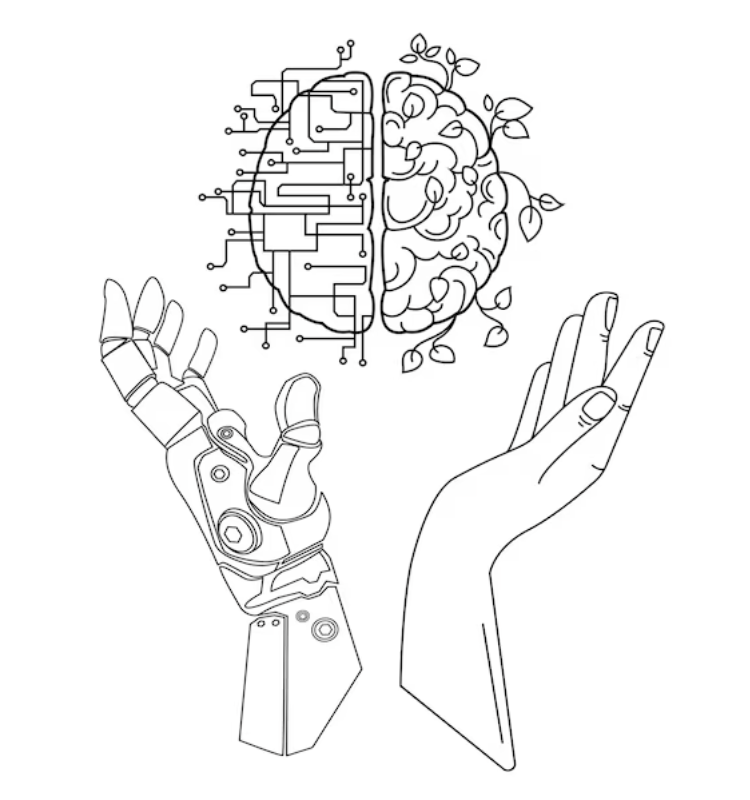
Now, we are the ones buried not in paperwork, but in endless, agonizing Zoom meetings. Jaws endlessly dropping at netlify presentations, ears stuffed with terms we barely understand. Hyper-automation, synergistic workflows, and algorithmic efficiency, fingers frantically Googling the difference between LLMs and RAG: brain reminding you that you should perhaps use chatGPT- not google anymore? Your prompts getting your Claude on the hallucinations highway, yet again. Deep learning under the desk, just to stay afloat. Doing little dances because you have an automated timesheets reminder that Claude sends via Slack to everyone who forgot to submit their timesheets. You take a screenshot with the ‘sent using @claude’ footnote and send it to your fellow (modern) relics. Women in tech! you caption it.
You look at the new crop of twenty-something tech whiz kids dismayed by you. You know they are dismayed by you because, every now and then, you catch them in their little banter, loudly agreeing that working with Millennials sucks.
And just like the internet shift, the AI shift is no longer a whisper; it is a corporate mandate. We sit in open-plan offices watching machine learning quietly optimize Becky’s entire department out of existence, her decade of institutional knowledge replaced by a clean API endpoint. We watch autonomous AI agents execute complex pipelines in seconds, giving us genuine goosebumps. We wonder if the things we spent decades becoming good at will continue to matter in quite the same way. We are no longer the drivers of the supersonic jets. We are just curious passengers holding on for dear life, learning, unlearning and relearning. In many ways intrigued by this revolution and the promise it holds for us and the generations that come after us
I still think of our yellow Peugeot 504. Of the rustic brown leather, the red string looped around the steering wheel, and my father’s quiet tenacity as the world he knew began to change. With the benefit of hindsight, I realise he understood then what we are only beginning to understand now: the world will keep reinventing itself, the road beneath us will keep shifting, and sometimes all we can do is summon the grit to keep going.


Leave a Reply